
Expanded PCR Panel Testing for Identification of Respiratory Pathogens and Coinfections in Influenza-like Illness
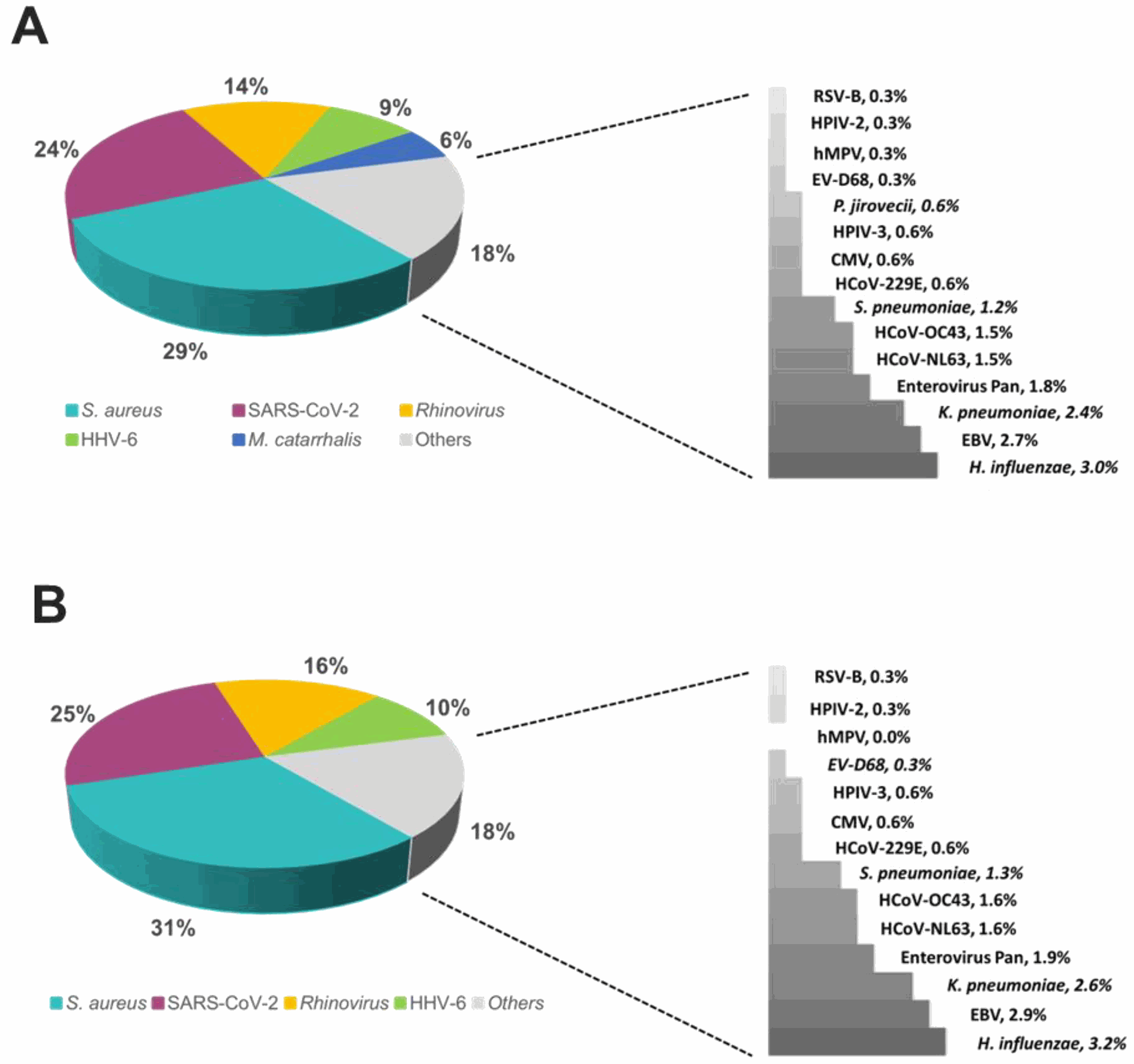
Practical Overview for Clinical Labs
A balanced 14-target menu typically spans high-prevalence viruses and key bacterial pathogens involved in URTI/LRTI. An example composition (adapt per local epidemiology and regulations):
Viruses (typical):
- Influenza A (± subtype group), Influenza B
- Respiratory syncytial virus (RSV A/B or pan-RSV)
- Human rhinovirus/enterovirus (pan-target or split)
- Human metapneumovirus (hMPV)
- Parainfluenza (pan or select types)
- Seasonal coronaviruses (e.g., 229E/NL63/OC43/HKU1 as a pan group)
- Adenovirus (respiratory-associated species)
Bacteria (typical):
- Streptococcus pneumoniae
- Haemophilus influenzae (typeable/non-typeable markers as applicable)
- Mycoplasma pneumoniae
- Chlamydia pneumoniae
- Tune the exact 14 to endemic patterns, antimicrobial stewardship priorities, and local guideline requirements.
2) Specimens & Pre-Analytics
- Specimen types: Nasopharyngeal/oropharyngeal swabs, combined swabs, mid-turbinate swabs, sputum, tracheal aspirates, BAL (per assay labeling).
- Collection: Flocked swabs with compatible transport medium; avoid excessive mucus for NAAT.
- Stability/transport: Cold chain if delays; minimize freeze–thaw; aliquot for repeats.
- Biosafety: Class II BSC for aerosol-generating matrices; unidirectional workflow.
- Pre-processing (lower airway): Mucolytics or dilution per SOP to reduce inhibitors and standardize input.
3) Workflow (Multiplex NAAT)
- Lysis/extraction (manual or automated) with extraction control spike-in.
- Multiplex amplification using probe-based chemistry in 1–2 wells/tubes or a cartridge format.
- Integrated internal controls (extraction + amplification) to monitor inhibition and run integrity.
- Detection & calling (Ct/qualitative flags per target).
- Result review against acceptance rules → same-day reporting feasible in many labs.
- Turnaround time: 2–6 h end-to-end depending on batching, extraction platform, and instrument cycles.
4) Controls & Run Acceptance
- Extraction control (IC-extraction): Confirms adequate lysis/purification; detects inhibitors.
- PCR control (IC-PCR): Flags amplification failures independent of target.
- Positive control: Low-copy synthetic or inactivated multi-analyte control for run acceptance.
- Negative controls: NTC and negative extraction blank to detect carryover/contamination.
- Run rules: Pre-defined Ct windows/curve shapes for controls; reject or repeat on any control failure.
5) Analytical Performance & Validation
- Complete matrix-specific verification/validation before routine use:
- LoD per target using contrived or reference materials.
- Inclusivity: Strain diversity across circulating lineages (esp. influenza, RSV, HRV/EV).
- Exclusivity: Near-neighbors and commensals; assess cross-reactivity in multiplex context.
- Precision: Intra/inter-run, inter-operator, and instrument variability.
- Interference: Mucus, blood, high host DNA, nasal sprays, common meds; define re-test criteria.
- Specimen stability: Time/temperature studies to support logistics.
- Expected patterns: Viral targets often show lower Ct earlier in illness; bacterial targets may persist with colonization nterpret with clinical correlation.
6) Reporting (Clear, Actionable)
Minimum elements: specimen type, collection time, method summary, control status, and a per-target qualitative call (Detected/Not Detected/Invalid), optionally with Ct values.
Add:
- Sample adequacy note (IC pass/fail; inhibition remarks).
- Co-detections clearly listed, with contextual guidance on colonization vs. infection.
- Interpretation notes (e.g., “Findings should be correlated with clinical presentation and imaging; consider bacterial superinfection assessment if influenza detected in severe LRTI”).
- Limitations (LoD, target list finite, not a susceptibility test).
Example snippet:
- Detected: Influenza A (Ct 24.8)
- Not Detected: RSV, hMPV, HRV/EV, PIV (pan), sCoV (pan), AdV, M. pneumoniae, C. pneumoniae, S. pneumoniae, H. influenzae
- Controls: IC-extraction PASS; IC-PCR PASS; NTC PASS
- Interpretation: Results support influenza A infection; correlate clinically. Consider antiviral per guideline; evaluate for bacterial coinfection if severity or risk factors present.
7) Clinical Utility & Benefits
- First-line breadth: Rapid rule-in of high-prevalence respiratory pathogens from a single sample.
- Seasonal surge readiness: Short TAT supports triage, cohorting, and antiviral/antibiotic decisions.
- Antimicrobial stewardship: Differentiates viral vs. bacterial etiologies to reduce unnecessary antibiotics.
- Infection control: Early identification enables isolation/cohorting strategies and exposure management.
- Escalation pathway: Negative or incongruent cases can proceed to reflex mNGS or targeted add-ons.
8) Interpretation Framework
- Match to syndrome & matrix: URTI vs. LRTI; specimen type influences predictive value.
- Cycle thresholds (if reported): Lower Ct ≈ higher nucleic-acid burden, but not a direct measure of infectivity.
- Co-detections: Weigh clinical context; some bacteria may reflect colonization rather than disease.
- Time-course effects: Early vs. late sampling can shift viral detectability and Ct.
- Next steps: Consider confirmatory or orthogonal tests if results and clinical picture diverge.
9) Common Pitfalls & Fixes
- Inhibition/invalids: Re-extract, dilute, or use inhibitor-tolerant chemistries; ensure proper swab/media selection.
- Carryover positives: Enforce unidirectional workflow; dUTP/UNG where applicable; strict area segregation.
- Over-calling colonizers: Add clear reporting language; integrate with WBC counts, CRP, imaging, and clinical severity.
- Epidemiology drift: Revisit the 14-target composition periodically to reflect circulating strains and stewardship goals.
Respiratory Pathogen Panel (14 Targets)
A 14-target respiratory panel provides broad, rapid, and actionable first-line screening during both endemic and peak seasons. With robust controls, disciplined validation, and clear reporting, it streamlines differential diagnosis and informs infection control and stewardship while leaving room to escalate to mNGS or additional assays when cases remain unresolved.